Mii relationship levels and status guide
Tomodachi Life Relationship Levels: Chart, Meaning, and Tips
Use this Tomodachi Life relationship levels guide to read a stage chart, understand Mii relationship signals, and improve a stalled connection without treating fan advice as a guaranteed formula.
Updated August 15, 2026
The short answer is that Tomodachi Life relationship levels are best used as a way to describe what you can observe, not as a confirmed public formula. A pair may move from an early introduction to a comfortable friendship, a romantic signal, or a lasting partnership, but a label alone cannot promise the next event. Read the stage together with recent conversations, activities, gifts, and the wider island context.
This fan guide gives you a practical relationship chart, explains what each stage can mean, and offers a careful order for improving a Mii relationship. It keeps the boundaries clear: Nintendo's public product information does not publish every hidden relationship probability, so the examples below are planning language and player-observation guidance rather than official mechanics.
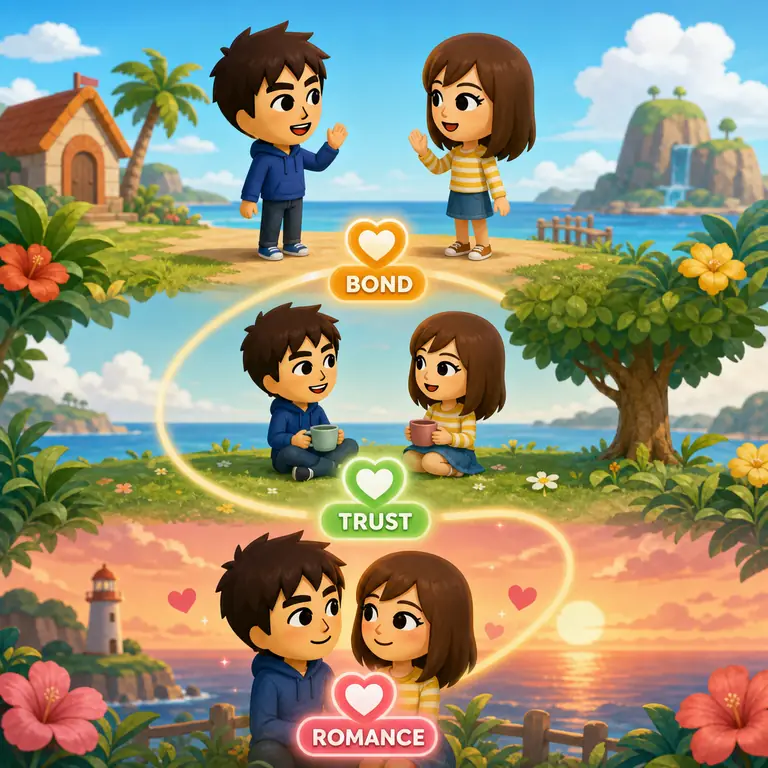
Quick answer: read the stage and the recent evidence together
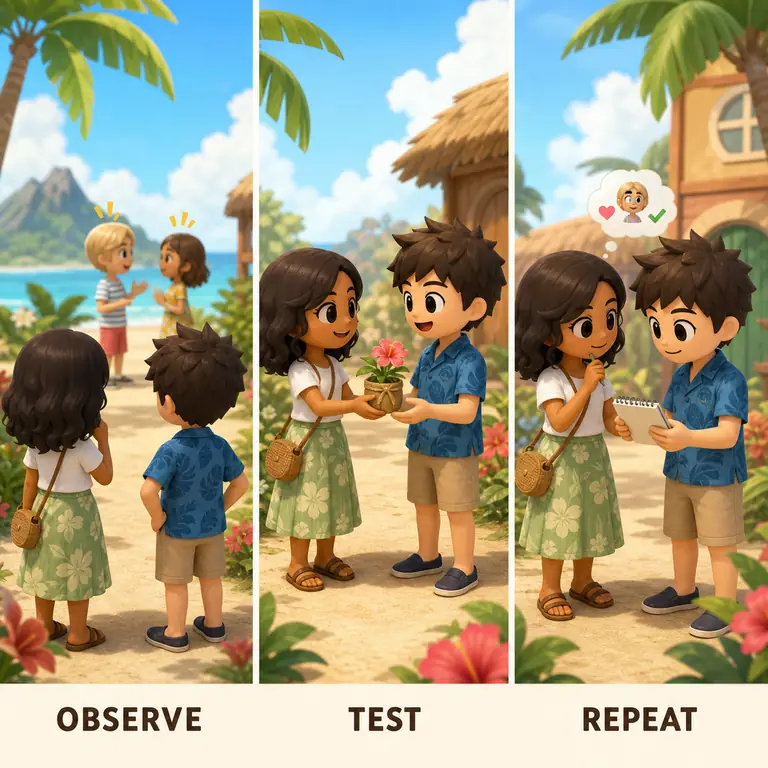
Use a relationship level as a summary of the current connection, not as a command. First record what happened recently, then check whether the pair has a believable reason to meet, and only after that test one small change. If the relationship is quiet, do not jump straight to a full personality rewrite. If it is tense, add patience or breathing room to the surrounding group. The most reliable workflow is observe, test one variable, and repeat.
What Tomodachi Life relationship levels can tell you
A stage is useful because it gives you a shared vocabulary for a messy island story. Early contact means the pair has a reason to notice each other but not much history. A friendly stage suggests that ordinary interactions are becoming easier. A romantic signal adds a different kind of interest, while a long-term partnership describes a relationship that has already become part of the island's structure. These descriptions help you decide what to observe next.
The important limitation is that the same visible moment can have more than one explanation. A gift may be remembered because it fits a hobby, because the timing was good, or because a random event happened to follow it. A quiet period may mean the pair needs more opportunities, or it may simply be a quiet period. Do not treat one scene as proof that one item controls a relationship level.
Level is not the same as personality compatibility
Personality compatibility is a planning comparison between two profiles. A relationship level is an observation about what has happened between two residents. A pair can look compatible on the chart and remain quiet, or have a surprising relationship despite a strong contrast. Use the chart to choose a testable pairing, then use the relationship signals to decide whether the story is actually developing.
Level is not a guaranteed event timer
A stage does not tell you that a confession, proposal, argument, or wedding must happen by a certain day. Avoid guides that turn a fan label into an exact countdown. Keep a date and a short note if you are testing a theory, but describe the result as an observation unless Nintendo publishes a specific rule.
Tomodachi Life relationship levels chart
The following chart is a practical interpretation for players who want to organize scenes and decide what to try next. It is intentionally cautious. The labels are not presented as confirmed in-game menu names, and they do not replace the final wording or mechanics shown in the released game. Use the evidence column as a reminder to look for repeated patterns instead of chasing one dramatic event.
Start at the lowest stage that matches the history you can actually describe. If two Miis have only exchanged one introduction, calling them established friends adds more certainty than the evidence supports. If they have shared several positive scenes, you can reasonably treat the connection as more comfortable while still leaving room for randomness and outside events.
| Early contact | The pair has met or has a clear reason to notice each other, but there is little shared history. | Look for another ordinary conversation or activity before changing a profile. |
| Friendly connection | Interactions feel easier and the pair has at least one shared interest, routine, or social bridge. | Repeat a low-pressure activity and see whether the signal appears more than once. |
| Close friendship | The residents are part of each other's readable island story and seem comfortable in several contexts. | Protect the good routine while checking whether the wider group adds friction. |
| Romantic interest | The game or your observations suggest a different kind of attention, but the next event remains uncertain. | Keep the pair's reason to meet visible and avoid claiming that a confession is guaranteed. |
| Established partnership | A long-term bond or major relationship event now affects how you plan the wider island. | Balance the couple with other residents instead of making every new Mii a copy of them. |
How to read a Mii relationship status without overclaiming
When a relationship changes, write down the context before choosing a conclusion. Note who initiated the interaction, where it happened, what activity or gift was involved, and whether the pair had a recent disagreement. This small record protects you from hindsight. A relationship may look better because the residents finally had time together, not because the last item you used is a universal solution.
It also helps to separate direct evidence from interpretation. Direct evidence is a scene, a visible status, a repeated invitation, or a conversation you can describe. Interpretation is the idea that a certain personality axis, gift, or room caused the change. Both can be useful, but they should not be written as if they have the same certainty.
Three questions before you change anything
Ask whether the pair has enough opportunities to meet, whether the two residents have a believable shared interest, and whether another island relationship is taking most of the social space. These questions often explain a stalled connection more plausibly than a sudden need to edit every slider. Preview a personality change only after the simpler explanations have been checked.
Use the personality chart as a comparison tool
The personality chart can show whether the pair shares pace, speech, expressiveness, or attitude. For a calm experiment, share two broad directions and keep one visible contrast. This makes the pair easier to understand without assuming that the chart exposes a hidden relationship calculation. Link the result back to the current relationship stage and keep both observations separate.
How to improve Mii relationships in a repeatable order
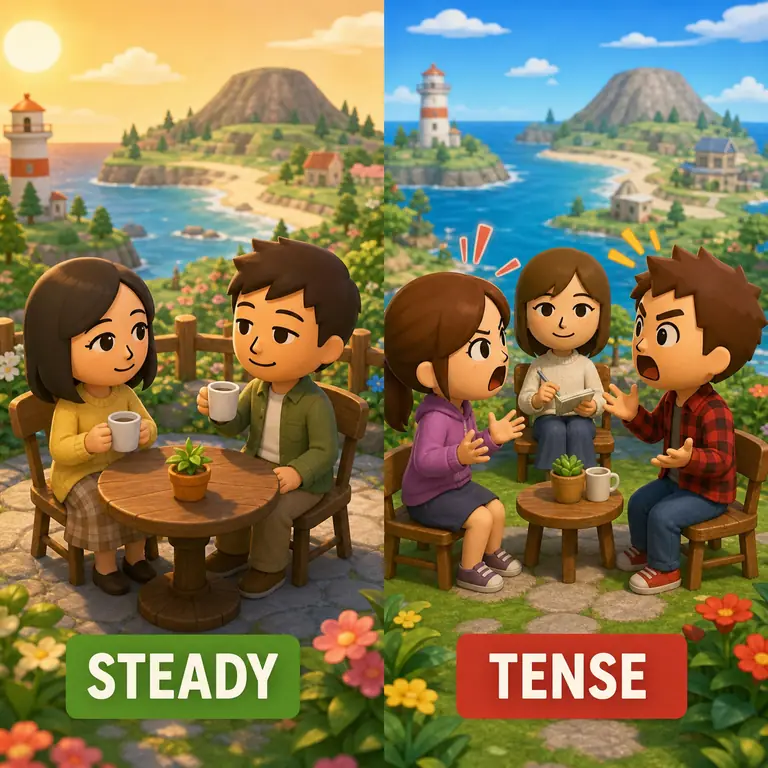
If the relationship is not developing, begin with the least disruptive change. First observe the current routine and write down the pair's roles. Next create one ordinary reason for them to meet, such as a shared activity, a compatible interest, or a resident who naturally introduces people. Then watch more than one scene. Only after that should you adjust one personality direction, room context, or gift choice and compare the result with the earlier note.
This order matters because changing four inputs at once hides the lesson. You may get a good scene but have no idea whether the improvement came from the activity, the timing, the surrounding residents, or the personality edit. A small before-and-after record is especially useful when you later want to restore a saved Mii or explain what happened to someone else.
Example: a patient mediator and a social host
Give the social host a reason to introduce people, while the mediator has a calm place and one shared interest. Try an ordinary activity rather than an intense intervention. If the pair becomes more comfortable, repeat the context once before you call it a pattern. If nothing changes, check whether another resident already fills the host role before editing either personality.
Example: two energetic residents
Two fast, expressive Miis can make memorable scenes but may also talk over each other or compete for attention. Keep one contrast in speech or attitude, add a shared activity, and give the island a calmer resident who can create space. A tense scene tells you what to observe next; it does not prove that the pair is impossible.
Relationship levels, gifts, and the wider island
Gifts and activities are useful as conversation starters because they give you a concrete experiment. Choose something that fits the resident's role or shared interest, then observe whether the pair gets another opportunity to interact. Avoid calling an item a guaranteed relationship-level shortcut. The useful question is whether the context makes the pair's story clearer and whether the effect can be observed again.
The wider island matters just as much. A relationship may feel stuck when one resident has too many competing routines, when every neighbor has the same intense personality pattern, or when the pair has no readable place to meet. Adding a quieter role, changing the social route, or creating a new Mii with a distinct job can improve the island without rewriting an existing story.
When a level seems to drop
Review the last few scenes instead of reacting to one argument. Check whether the pair had a conflict, whether another relationship changed the group, and whether you introduced too many strong personalities at once. Restore the earlier routine first. If you still edit a profile, change one axis and keep the original values documented.
When romance is the real question
Use the existing guide on how to make Miis fall in love for introductions, activities, relationship signals, and marriage limits. This levels page should remain the place to interpret stages and choose a careful next test, while the romance page handles the narrower process intent. Linking the two pages gives readers a clearer path without merging their search purposes.
Common mistakes and the limits of a relationship chart
The most common mistake is treating a chart as a hidden data dump. Old fan charts can preserve useful vocabulary, but they may describe a different release, translation, or player theory. The safer approach is to state what you observed, separate it from what you infer, and update the guide when official help text or final in-game screens provide better evidence.
Another mistake is optimizing for one couple until the island loses contrast. A relationship level is only one part of the island's story. Keep calm residents, social starters, planners, artists, and independent characters where they add a recognizable role. If a relationship needs constant emergency edits to remain interesting, step back and redesign the surrounding cast before blaming one Mii.
What this guide does not promise
It does not promise a confession, a proposal, a wedding date, an exact level name, a fixed gift result, or a universal personality formula. It also does not provide a download, installer, or unofficial claim of Nintendo affiliation. The value is a transparent planning method that helps you make smaller changes and describe results honestly.
A short maintenance checklist
When Nintendo publishes new relationship details, review the chart labels, examples, FAQ, and source note together. Remove any statement that sounds more certain than the new evidence. Until then, use this page as a current fan reference for organizing observations, not as a substitute for the final game or official support.
Sources and image note
Nintendo's official product page was checked for public product context. The relationship levels, examples, and compatibility explanations on this page are independent fan planning guidance. The three WebP files are generated editorial concept illustrations, not official gameplay screenshots or Nintendo UI.
Tomodachi Life relationship levels FAQ
What are the levels of relationships in Tomodachi Life?
Use early contact, friendly connection, close friendship, romantic interest, and established partnership as practical planning stages. They describe observable history and should not be treated as confirmed hidden menu labels unless the final game documents them.
How do I improve Mii relationships in Tomodachi Life?
Observe the current routine, create one believable reason to meet, try one compatible activity or gift, and watch more than one scene before changing another input. If the pair is tense, add patience or breathing room to the wider island.
Is there an official Tomodachi Life relationship chart?
Nintendo's public product information does not provide the complete relationship-level formula used by every outcome. This page is an independent chart for organizing player observations, not an official Nintendo chart.
Are relationship levels the same as personality compatibility?
No. Compatibility compares two personality profiles, while a relationship level summarizes what has happened between two residents. Use both, but keep the evidence and the interpretation separate.
Do gifts automatically raise a Mii relationship level?
Do not assume that a gift automatically raises a relationship. A fitting gift can create a useful interaction, but timing, activities, other residents, and randomness may also matter. Record the context before calling it a pattern.
How do relationship levels connect to making Miis fall in love?
The level chart helps you interpret the current stage. The separate romance guide covers introductions, activities, relationship signals, and marriage limits. A higher stage can be encouraging, but it cannot guarantee a confession or wedding.