16-type personality guide
Tomodachi Life Personalities: 16 Types and How to Choose Them
Use this Tomodachi Life personalities guide to understand all 16 personality types, trait sliders, Mii matching, island balance, and common mistakes.
Updated August 3, 2026
The fastest way to use Tomodachi Life personalities is to choose the behavior you want first, then adjust the four trait axes to match that goal. A lively singer Mii, a calm family member, and a private thinker should not start from the same slider pattern. The names are useful, but the real decision is tempo, speech, expression, and attitude.
This guide supports the calculator on the homepage. Use it when you want the meaning behind each personality group, a cleaner way to get all 16 types, or a practical method for balancing friendships and apartments. It is a fan-made planning guide, not an official Nintendo formula dump, so it separates confirmed game context from player-facing assumptions.
Quick answer
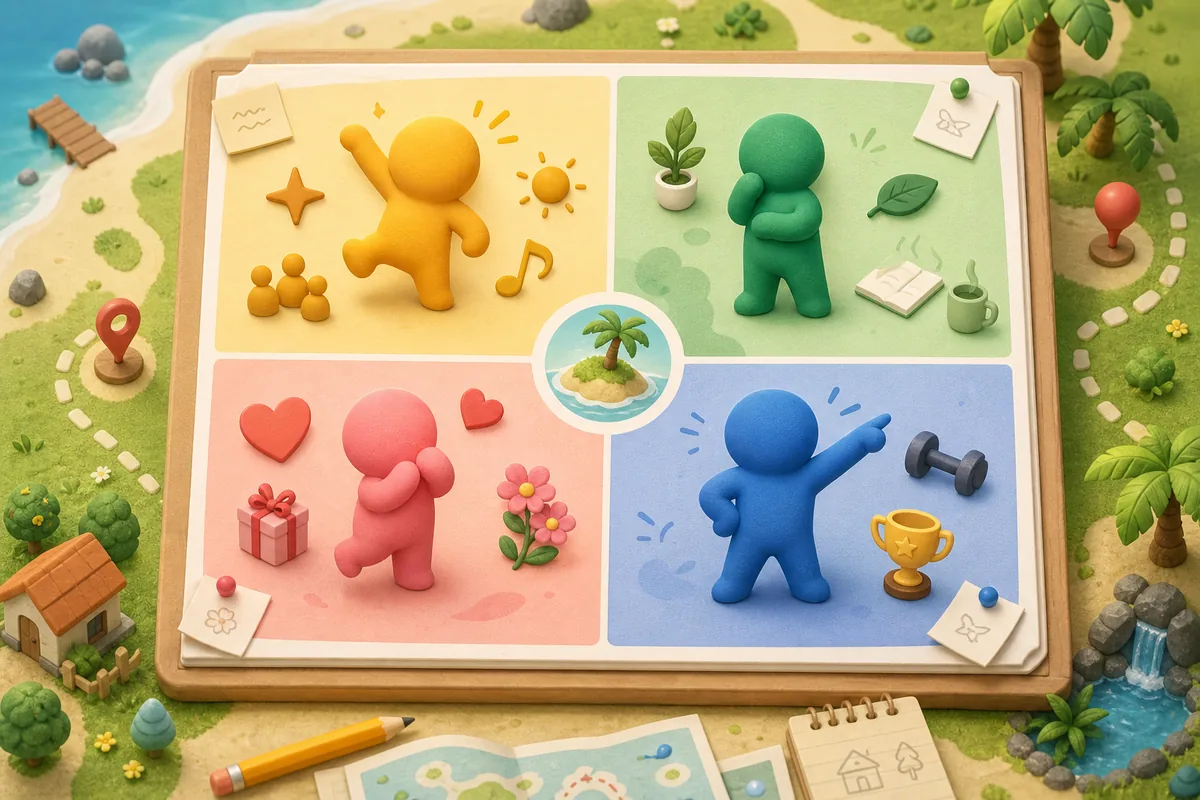
Tomodachi Life personalities can be planned as four broad families: Easygoing, Outgoing, Confident, and Independent. Each family has four variants, giving 16 useful planning types. Start with the Mii's role on your island, set movement and speech first, then use expression and attitude to fine-tune whether the result feels calm, dramatic, direct, or relaxed.
How the 16 personality types work
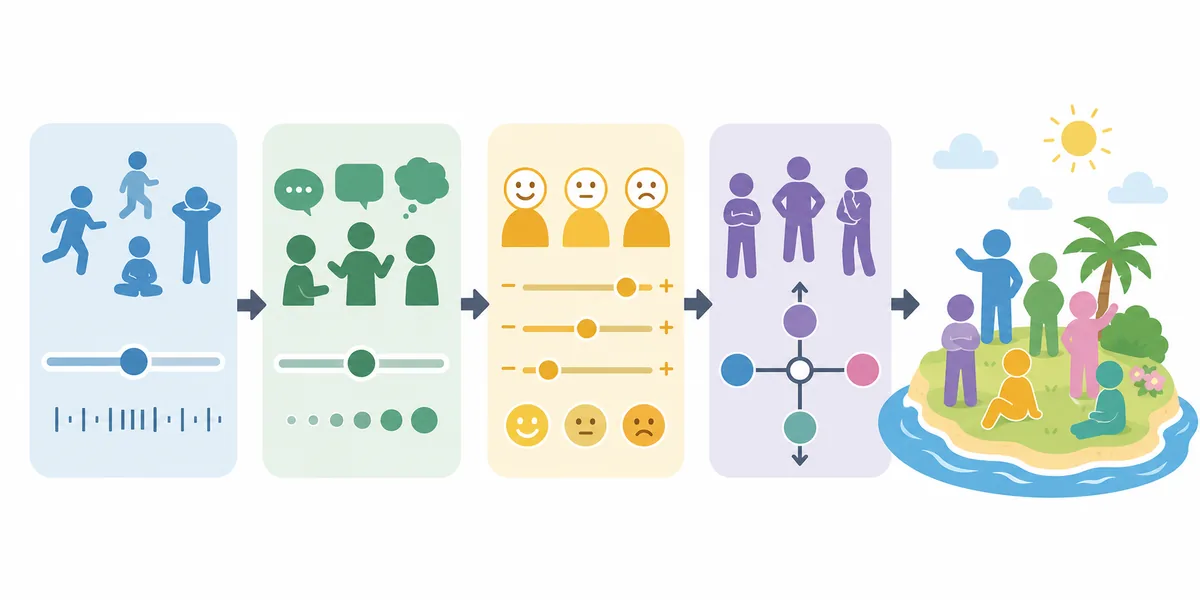
Most players search for a table because the personality names alone do not explain what to do. Treat the 16 types as a map. Movement tells you whether the Mii feels slow, steady, or energetic. Speech tells you whether conversations feel careful or direct. Expression decides how visible emotions are. Attitude decides whether the character reads as serious or relaxed.
The four large families are easier to remember than all 16 labels. Easygoing types are useful when an island needs low-drama residents. Outgoing types create more obvious social energy. Confident types feel decisive and planned. Independent types work well when you want a private, unusual, or strongly self-directed resident.
Choose the type before touching every slider
A common mistake is moving every value until the name looks interesting. That makes it hard to reproduce the result later. Decide the Mii's job first: peacemaker, performer, ambitious rival, quiet artist, careful friend, or surprise wildcard. Then choose the two most important axes and adjust the other two only after the type feels close.
For example, a charismatic performer usually starts with quick movement, direct speech, expressive reactions, and a relaxed attitude. If that Mii feels too intense, reduce expression first. If the Mii feels rude instead of energetic, reduce speech directness. One change at a time teaches you which axis actually moved the personality.
Personality families and best uses
The table below uses fan-friendly labels from this site. Regional names and final wording can differ, especially around Living the Dream coverage, so use the descriptions as planning guidance rather than as proof of internal game data.
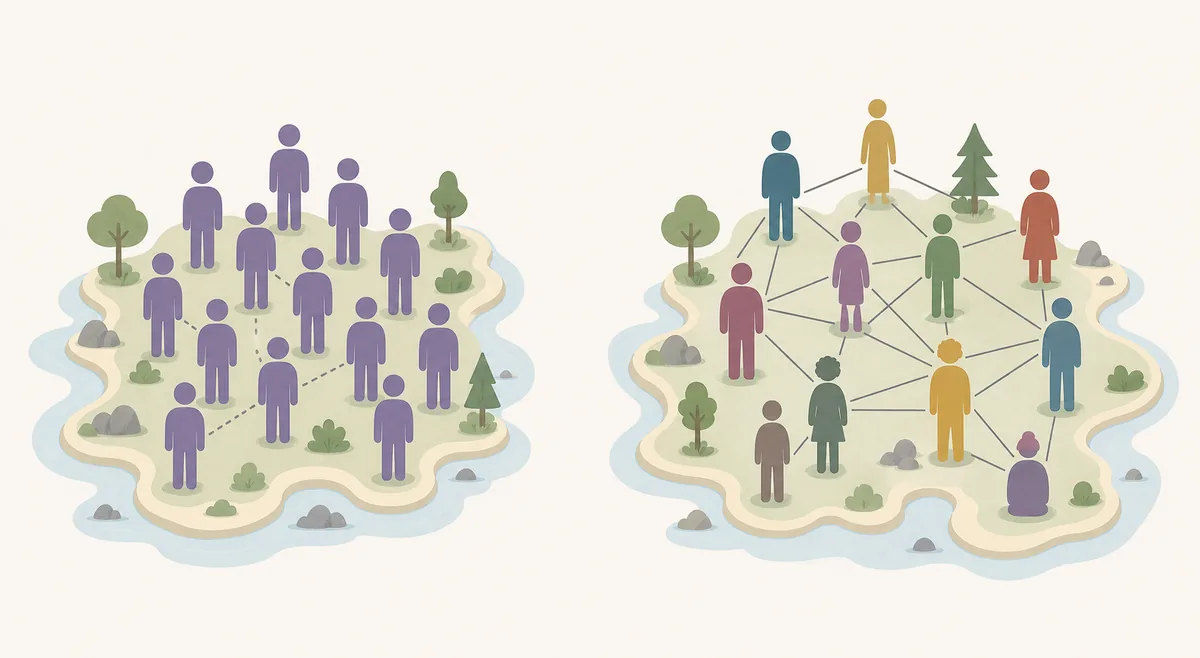
A balanced island rarely needs every Mii to be exciting. You usually want a mix of anchors, social starters, planners, and unusual residents. That mix gives gifts, rooms, songs, and introductions more context than a group full of similar profiles.
| Family | Type | Planning use |
|---|---|---|
| Easygoing | Easygoing Optimist | Calm tempo, warm expression, relaxed attitude, low conflict risk. |
| Easygoing | Easygoing Dreamer | Slow decisions, big imagination, gentle reactions, needs patient friends. |
| Easygoing | Easygoing Softie | Polite and supportive, avoids pressure, best with steady island routines. |
| Easygoing | Easygoing Buddy | Relaxed and sociable, adapts quickly when rooms and gifts match hobbies. |
| Outgoing | Outgoing Entertainer | Fast energy, expressive speech, loves group moments and visible praise. |
| Outgoing | Outgoing Trendsetter | Quick choices, bright style, enjoys novelty and shared activities. |
| Outgoing | Outgoing Leader | Direct, active, decisive, often drives friendships forward. |
| Outgoing | Outgoing Charmer | Expressive and friendly, strong first impressions, needs balanced attention. |
| Confident | Confident Designer | Structured taste, clear standards, good for planned interiors and outfits. |
| Confident | Confident Go-getter | Direct and ambitious, responds well to goals and achievement rewards. |
| Confident | Confident Adventurer | High movement and flexible attitude, enjoys new foods, songs, and trips. |
| Confident | Confident Brainiac | Serious, articulate, thoughtful, best with precise gifts and calm pacing. |
| Independent | Independent Thinker | Private, analytical, low drama, prefers deliberate matching. |
| Independent | Independent Free Spirit | Unusual rhythm, relaxed rules, surprising but memorable friendships. |
| Independent | Independent Artist | Expressive but self-directed, benefits from creative rooms and outfits. |
| Independent | Independent Lone Wolf | Slow trust, strong preferences, happiest with space and careful gifts. |
Matching tips for friendship and romance scenes
The safest pairing usually shares two axes and differs on one. Similar movement makes pacing feel natural. Similar speech reduces obvious friction. Different expression can make scenes more memorable without making the relationship feel random.
Do not assume identical types are always best. Two high-energy, direct Miis may create funny moments, but they can also feel noisy if the whole apartment floor already has that tone. A relaxed or careful resident can stabilize the group and make the dramatic personalities stand out.
How to get all 16 personalities
To get all 16 personalities, work systematically. First create four base profiles: calm, social, decisive, and independent. Then make four variations inside each base by changing expression and attitude. Record the old result before each change so you can reverse a profile if the new result feels wrong.
The homepage calculator is useful for this because it lets you compare neighboring outcomes without pretending that every hidden value is confirmed. When official regional wording becomes stable, update your labels but keep the same process: one axis at a time, then a short real-play check.
What changed with Living the Dream searches
Search interest now mixes older Tomodachi Life memory with Living the Dream research. That is why a guide should not rely only on a legacy chart image. Players need a current explanation that acknowledges official Nintendo product information while avoiding fake claims about exact hidden formulas.
This page uses official links only for product context and uses a fan model for personality planning. If Nintendo publishes final help text, regional names, or in-game personality screens, those should replace assumptions near the top of the guide.
Sources and media note
Official Nintendo pages were checked for product context. Official screenshots and store artwork were not copied into local assets; the three WebP images on this page are clearly illustrative editorial graphics generated for explanation.
Tomodachi Life personalities FAQ
What are the main Tomodachi Life personality families?
The practical families are Easygoing, Outgoing, Confident, and Independent. Each family can be split into four variants for a 16-type planning map.
How do I get all 16 personalities in Tomodachi Life Living the Dream?
Use a systematic process: create four broad base profiles, then vary expression and attitude inside each family. Record each result before changing another axis.
Is this personality guide official?
No. It is a fan-made guide that uses official sources for product context and a transparent model for personality planning.
Should I use a personality chart or a calculator?
Use the chart to understand the map and the calculator to test a specific Mii before saving a profile.
Which personality type is best?
There is no universal best type. A balanced island usually needs calm residents, social starters, decisive planners, and unusual independent Miis.