Practical character concept guide
15 Tomodachi Life Mii Ideas for a More Interesting Island
Find practical Tomodachi Life Mii ideas, character roles, personality matches, and a simple way to build a balanced island cast.
Updated August 8, 2026
The best Tomodachi Life Mii ideas start with a role, not a random face. Decide what this resident adds to the island, then choose a look, room, voice, and personality direction that support the same concept.
This guide gives you 15 reusable ideas for new Miis, explains how to turn an idea into four trait choices, and shows how to avoid building an island where every resident feels like the same energetic character. The ideas are fan planning prompts, not official Nintendo character recipes.
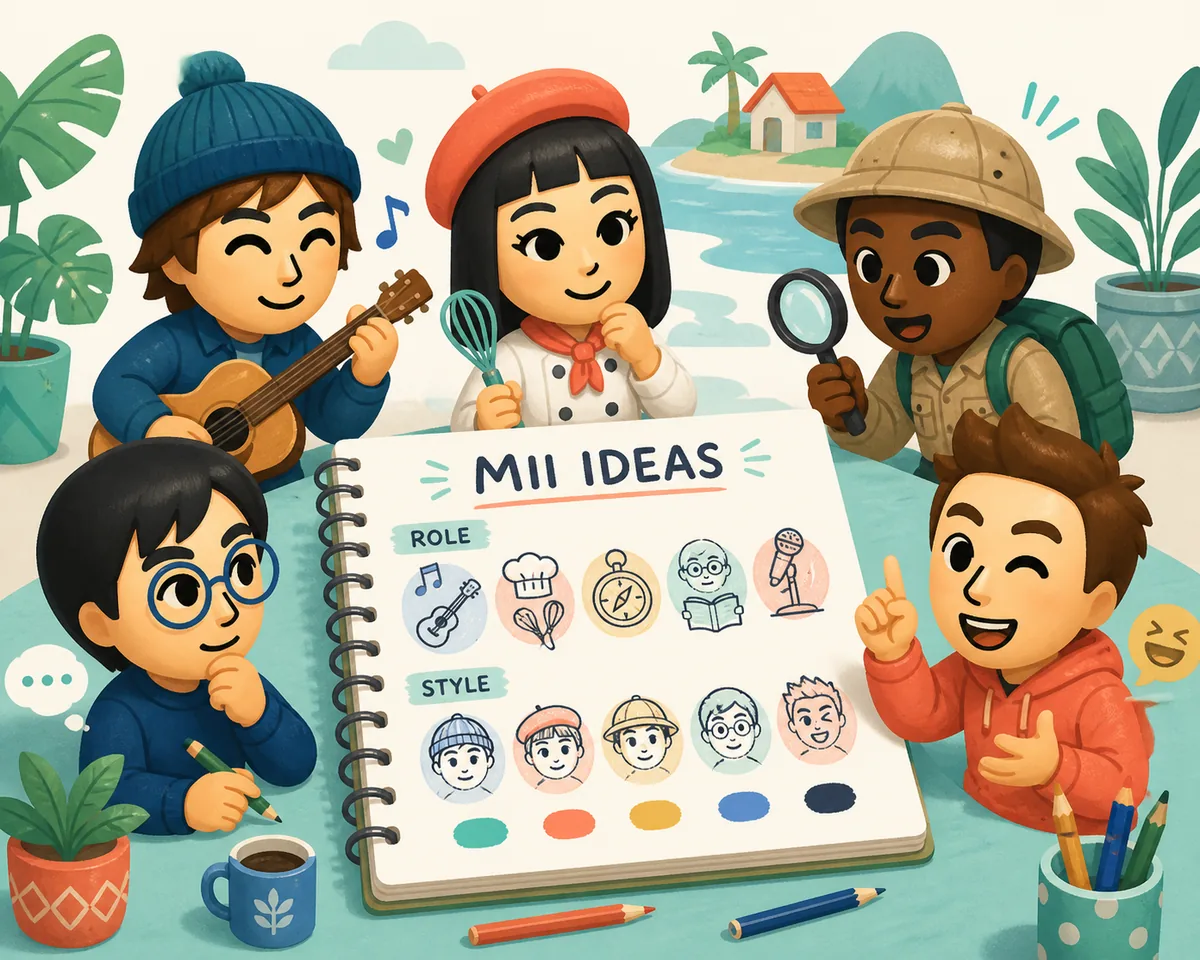
Quick answer: start with five island roles
If you do not know which Miis to make, begin with a social starter, a calm mediator, a creative specialist, a decisive organizer, and an independent wildcard. Those roles create more useful contrast than making five versions of the same celebrity or favorite archetype. Pick one role, write one sentence about the resident, choose two visual cues, and use the personality calculator to test the closest trait pattern before you save anything.
Tomodachi Life Mii ideas work better when each resident has a job
A character idea becomes useful when it answers a practical question: who starts conversations, who softens arguments, who brings unusual hobbies, and who gives the group a clear direction? This does not mean a personality guarantees a friendship or event. It gives you a reason to place the resident on the island and a way to tell whether the design feels coherent.
Use a short concept sentence before opening the editor. For example: a patient baker who remembers everyone's favorite snack, a competitive organizer who turns every activity into a challenge, or a quiet astronomer who prefers one close friend. The sentence keeps the face, room, catchphrase, and personality from drifting in unrelated directions.
Five roles that make a small island feel varied
A social starter creates introductions and group scenes. A mediator gives a busy apartment someone patient to balance it. A creative specialist gives you a reason to use unusual rooms, outfits, songs, or gifts. An organizer makes a good decisive presence for planned groups. An independent wildcard adds distance, humor, or a surprising point of view without needing to dominate every scene.
Why celebrity-only lists become repetitive
Celebrity and fictional-character Miis can be fun, but a list made only from recognizable faces often leaves the island without contrasting roles. Mix recognizable references with original residents whose purpose is clear. That combination gives you both the joke of recognition and the flexibility of a character built for your island's needs.
15 Mii ideas to build, remix, or combine
You do not need to use all 15 ideas. Treat them as starting points and combine two when a single role feels too narrow. The strongest concepts usually have one main role, one visual theme, and one trait contrast that makes the resident easy to recognize in a group.
For a first batch, choose three roles that stabilize the island and two that add surprise. After you observe the group, add a second resident only when it fills a different social or creative space. This keeps the cast readable while still leaving room for funny accidents and unexpected relationships.
| Idea | Role | Starting direction |
|---|---|---|
| The social host | Starts introductions | Quick or centered movement; warm expression |
| The calm mediator | Softens busy groups | Careful speech; relaxed attitude |
| The competitive organizer | Creates goals | Direct speech; serious attitude |
| The neighborhood chef | Connects people through food | Warm expression; steady pace |
| The quiet astronomer | Adds a reflective point of view | Slow movement; restrained expression |
| The island comedian | Breaks tension | Expressive reactions; relaxed attitude |
| The practical fixer | Solves everyday problems | Centered traits; direct but calm speech |
| The creative artist | Adds visual and musical themes | Expressive style; independent attitude |
| The friendly rival | Creates playful competition | Quick movement; direct speech |
| The independent wildcard | Adds surprise | One strong unusual trait; space for others |
| The patient teacher | Explains and steadies scenes | Careful speech; warm expression |
| The travel collector | Brings a curious theme | Quick movement; flexible attitude |
| The family historian | Creates continuity | Steady pace; thoughtful attitude |
| The stage performer | Drives group energy | High expression; relaxed confidence |
| The quiet friend | Builds one-to-one bonds | Slower pace; careful speech |
Turn a character idea into personality traits
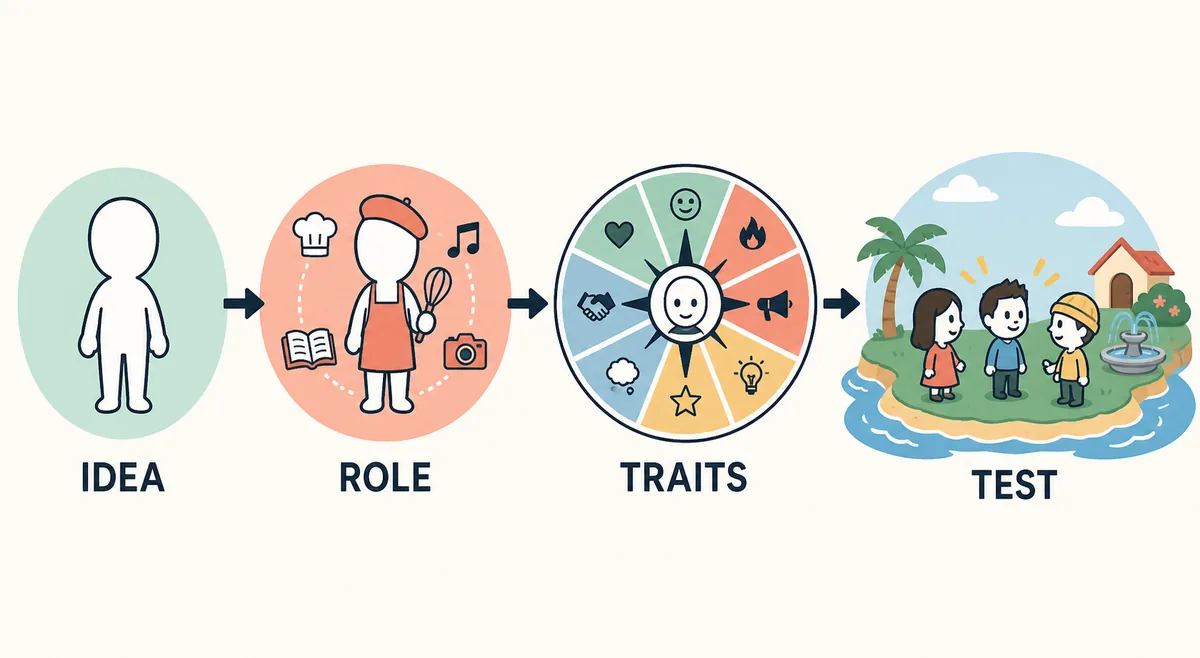
Once you choose a role, do not move every personality control at random. Translate the concept into four simple decisions: how quickly the resident acts, how direct their speech feels, how visible their emotions are, and whether their attitude reads serious or relaxed. These are planning directions used by this fan site, not a claim about a hidden official formula.
The goal is consistency, not a perfect label. A calm mediator might use centered movement, careful speech, warm expression, and a relaxed attitude. A competitive organizer might be quicker, more direct, visibly expressive, and more serious about goals. If the result feels too strong, lower the one axis that causes the problem instead of rebuilding the whole profile.
A practical four-question test
Ask: does this Mii react quickly or slowly? Do they speak carefully or directly? Do they show emotion easily or keep it private? Do they approach the island seriously or with a relaxed attitude? Write the answers down before saving. The record matters because it lets you compare a nearby type without forgetting what changed.
Example: the quiet astronomer
Start with slower movement, careful speech, restrained expression, and a serious or thoughtful attitude. Give the resident one close-friend goal instead of forcing them into every group scene. If the result becomes too distant, raise expression slightly before changing all four directions.
Choose Mii ideas for the size and mood of your island
A small island does not need 15 residents on day one. Start with five clearly different roles and observe how the group feels. If the island is already full of direct, fast, expressive characters, the next useful idea is probably a patient or independent resident rather than another performer.
For a larger cast, use clusters with different purposes: a family group, a creative group, a competitive group, and a few residents who connect those groups. Shared interests can make a cluster readable, while one contrasting trait prevents every member from becoming interchangeable.
A simple first-five lineup
Try a calm listener, a social host, a practical planner, a creative artist, and a playful wildcard. This lineup gives you different conversation tempos and visual themes without promising a fixed event outcome. Add more residents after you see which role the island is missing.
Use the existing chart as a check, not a cage
The 16-type guide is useful when you want to compare nearby personality families. It should not force every character into an exact template. If the role sentence and the visual concept are strong, keep the resident and adjust only the trait that makes the group hard to read.
Avoid an island where every Mii feels the same
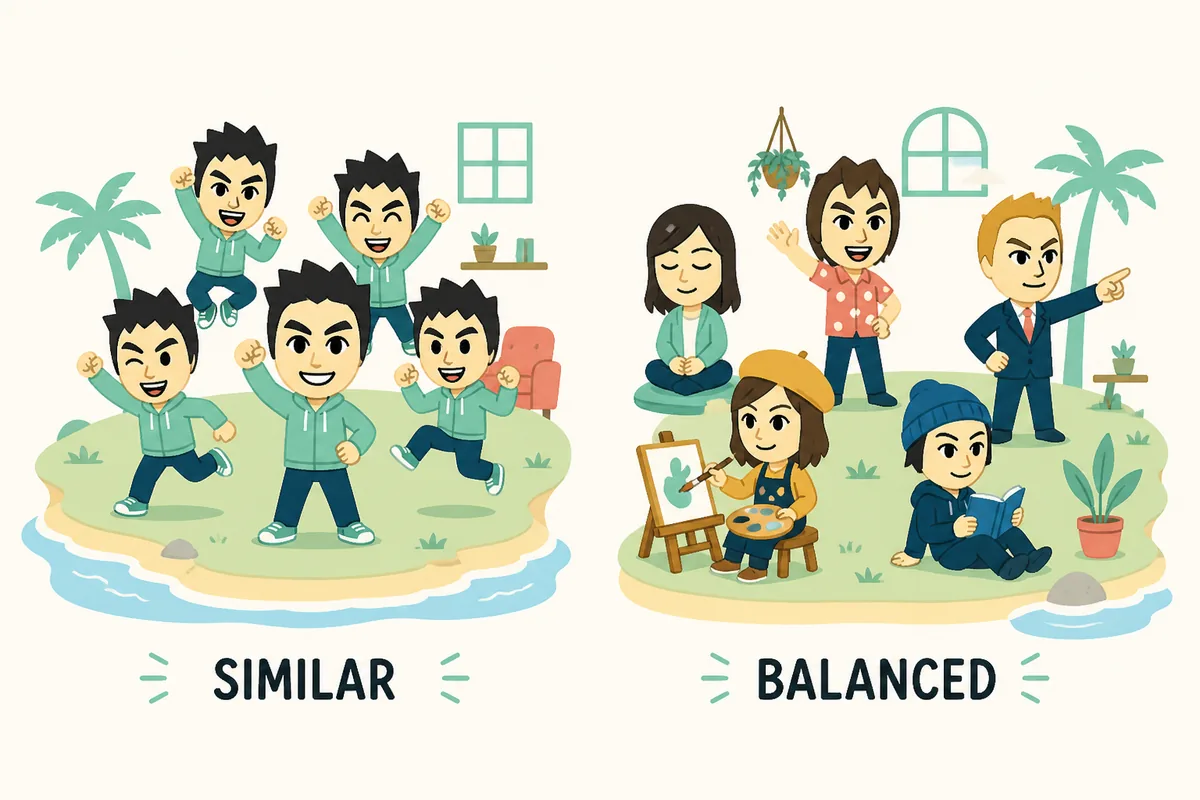
Similarity is not automatically bad. Two residents with a shared rhythm can make a believable friendship or family pair, and a group of energetic Miis can create a deliberately chaotic theme. The problem is accidental repetition: several residents with the same pace, speech style, expression, room, and social role leave you with no clear contrast when a scene changes.
Compare the group before adding another Mii. Count the roles already represented, then identify the strongest missing contrast. A new resident can differ in only one or two axes and still add value if their role, room, or hobby gives them a reason to exist.
When similar Miis are useful
Use similar profiles when you are building siblings, a band, a rival pair, or a deliberately themed apartment. Give the group one visible difference, such as a patient mediator or a quieter planner, so the theme has a point of tension instead of becoming a row of copies.
The one-axis contrast rule
If two residents are visually similar, change one strong planning direction or give one a different role. A careful speaker inside a loud group can be more useful than a completely opposite character because the contrast remains easy to observe.
A repeatable workflow for making new Miis
1. Name the role in one sentence. Avoid starting with a face or a celebrity reference that gives you no behavior to plan.
2. Pick two visual cues. A chef might need a warm room and food-related gifts; an explorer might need a travel theme and a curious expression.
3. Choose the two strongest personality directions. Leave the other two centered until you know what the concept is missing.
4. Preview the result with the homepage calculator and compare it with one neighboring type in the 16-type guide.
5. Save a short before-and-after note. If the resident feels too loud, too distant, or too serious, change one axis and observe several scenes before making a second change.
6. Review the island as a group. Keep the new Mii when it adds a role, contrast, or story reason; revise it when it only repeats an existing resident.
What to do when an idea does not work
Do not delete the concept immediately. Separate the problem into role, visual theme, and personality. If the role is good but the resident feels too intense, soften one trait. If the role is unclear, rewrite the one-sentence concept before touching the sliders again.
Facts, fan planning, and future updates
Nintendo's official product page is the right place to verify publicly described product and creation information. The role lists, trait translations, and island-balance suggestions here are fan planning guidance. If the final game adds official personality labels or a clearer creation screen, use that wording and update the guide.
Sources and image note
Nintendo's official product page was checked for public product and Mii-creation context. The three WebP assets on this page are generated editorial illustrations, not official screenshots, and the practical role and trait suggestions are fan planning guidance.
Tomodachi Life Mii ideas FAQ
What Miis should I make in Tomodachi Life?
Start with roles that your island does not have yet: a social starter, calm mediator, creative specialist, decisive organizer, and independent wildcard are useful first choices. Then add visual cues and test the closest personality direction.
What are good Tomodachi Life Mii ideas for a small island?
Use five contrasting roles rather than five random faces. A calm listener, social host, practical planner, artist, and playful wildcard create a readable first group without requiring a large cast.
Should Mii ideas match personality settings?
They should be consistent enough to be recognizable, but they do not need an exact formula. Choose two strong trait directions, keep the others centered, and change one axis if the result feels too intense or too distant.
Can I use celebrity or fictional-character Miis?
Yes, as fan creations. Mix recognizable references with original role-based residents so the island has more than one kind of story and does not depend on a list of names alone.
How many custom Miis should I make first?
Five is a useful starting group: calm, social, decisive, creative, and independent. Add another Mii when you can name the role or contrast it adds to the island.
Are these official Nintendo Mii recipes?
No. This is an independent fan guide. Use Nintendo's official page for public product context and treat the roles, labels, and trait suggestions as planning ideas that may need revision when final in-game details are published.