Practical island layout guide
Tomodachi Life Island Ideas: 7 Layout Tips for a Better Island
Explore Tomodachi Life island ideas for themes, paths, resident zones, names, and a layout that stays easy to read as your island grows.
Updated August 15, 2026
The strongest Tomodachi Life island ideas start with a readable plan, not a pile of decorations. Give the island a central meeting point, leave room for paths, and decide which areas should feel social, quiet, practical, or themed before you fill every space.
This guide focuses on the whole island rather than one character. Players looking for Tomodachi Life Living the Dream island ideas or Tomodachi Life Living the Dream island layout ideas can use the same framework: seven layout ideas, a simple zone table, resident grouping, and a repeatable planning method. These are fan-made suggestions, not an official Nintendo map or a promise that a specific layout changes hidden game events.
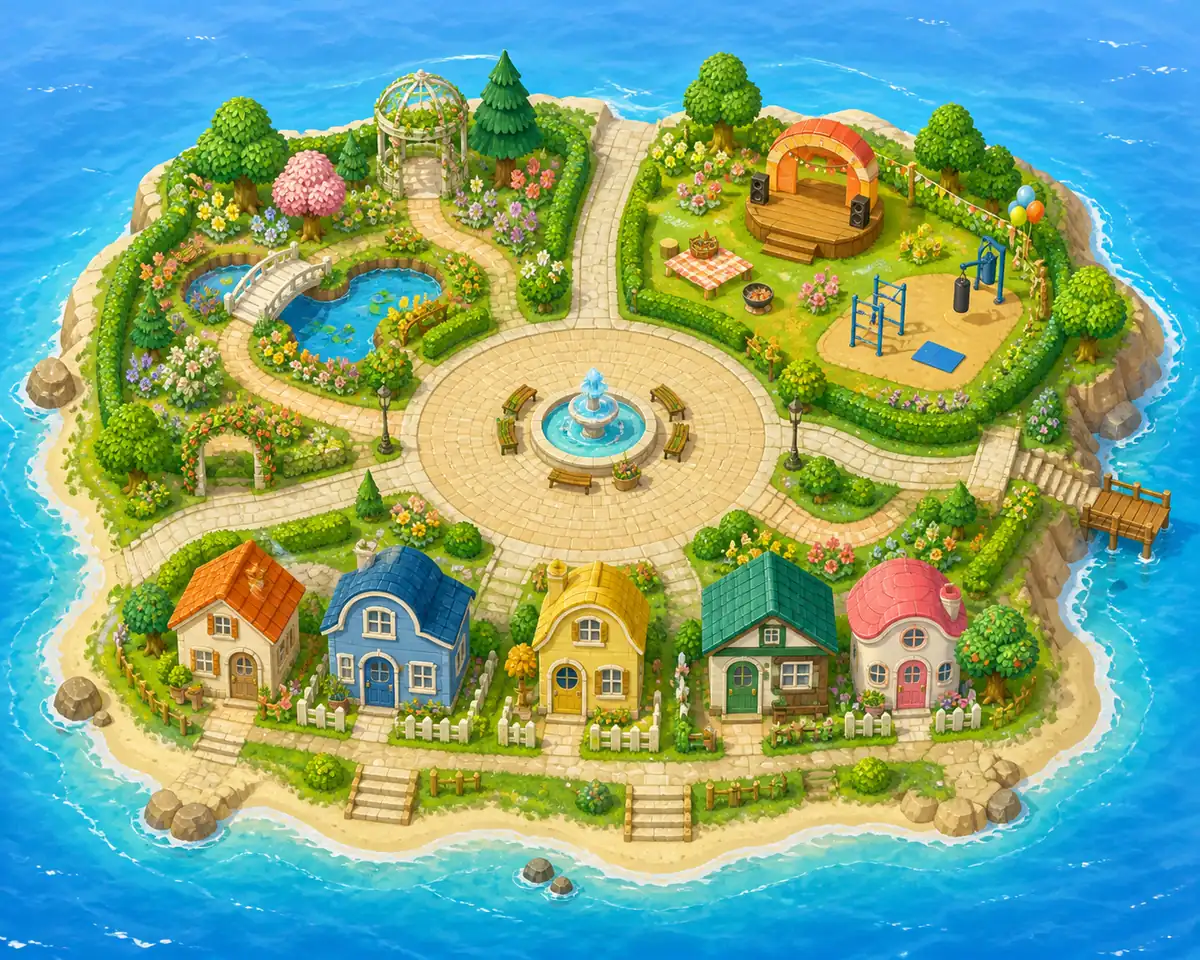
Quick answer: build around four readable zones
Start with a central plaza, then place homes, social activities, and a quiet nature area around it. Keep one main path easy to follow and use smaller paths to create neighborhoods rather than turning every open tile into decoration. A good island idea answers three questions: where do residents meet, where can the island breathe, and what makes this island different from a generic collection of buildings? Add a theme only after the movement through the island feels clear. If your island is already crowded, remove or regroup one area at a time instead of rebuilding everything at once.
1. Start with one clear island promise
A theme works best when it tells you what to keep, what to group, and what to leave out. A garden island might prioritize paths, trees, water, and calm homes. A festival island might place a plaza, stage, food stalls, and colorful homes close together. You do not need to label the theme inside the game; the point is to make later choices easier.
Write one sentence before moving buildings or decorating. For example: this is a friendly island where residents meet in the center, active events happen on the east side, and the west side gives quieter characters room to slow down. That sentence becomes a filter for new furniture, residents, and paths.
A promise, not a pile of objects
If an object does not support the island's mood, a resident role, a useful route, or a recognizable landmark, wait before placing it. A smaller number of deliberate choices is easier to read than a full island where every corner competes for attention.
A plan that can grow
Leave at least one flexible edge or open corridor. New residents, buildings, events, or official details may change how you use the island. A layout that has no spare space looks complete today but becomes frustrating after one expansion.
2. Seven Tomodachi Life island layout ideas
Use the table as a menu, not a checklist. Choose one main structure and borrow one or two details from another. For a small island, a central hub with three spokes is easier to maintain than a complex grid. For a large cast, neighborhoods help you remember who belongs together without isolating everyone from the main route.
The best layout is the one you can explain in a few seconds. If you cannot point from the plaza to a home group, activity area, or quiet corner without crossing several unrelated decorations, simplify the route before adding more theme pieces.
| Structure | Best for | First move |
|---|---|---|
| Central hub | Small islands and fast navigation | Place one landmark in the middle and draw three clear paths. |
| Three spokes | A compact cast with distinct roles | Separate homes, social activity, and nature into three directions. |
| Loop route | Exploration and neighborhood stories | Connect several areas in a loop with one obvious center. |
| Quiet edge | Calm, private, or nature-focused themes | Reserve one outer section for water, trees, and slower routes. |
| Festival strip | Events, food, music, and group scenes | Keep lively landmarks together so the theme has a visible address. |
| Color neighborhoods | Large casts or family groups | Give each group one color cue and one connector landmark. |
| Flexible frontier | Islands that will keep changing | Leave one open edge for future residents, buildings, or ideas. |
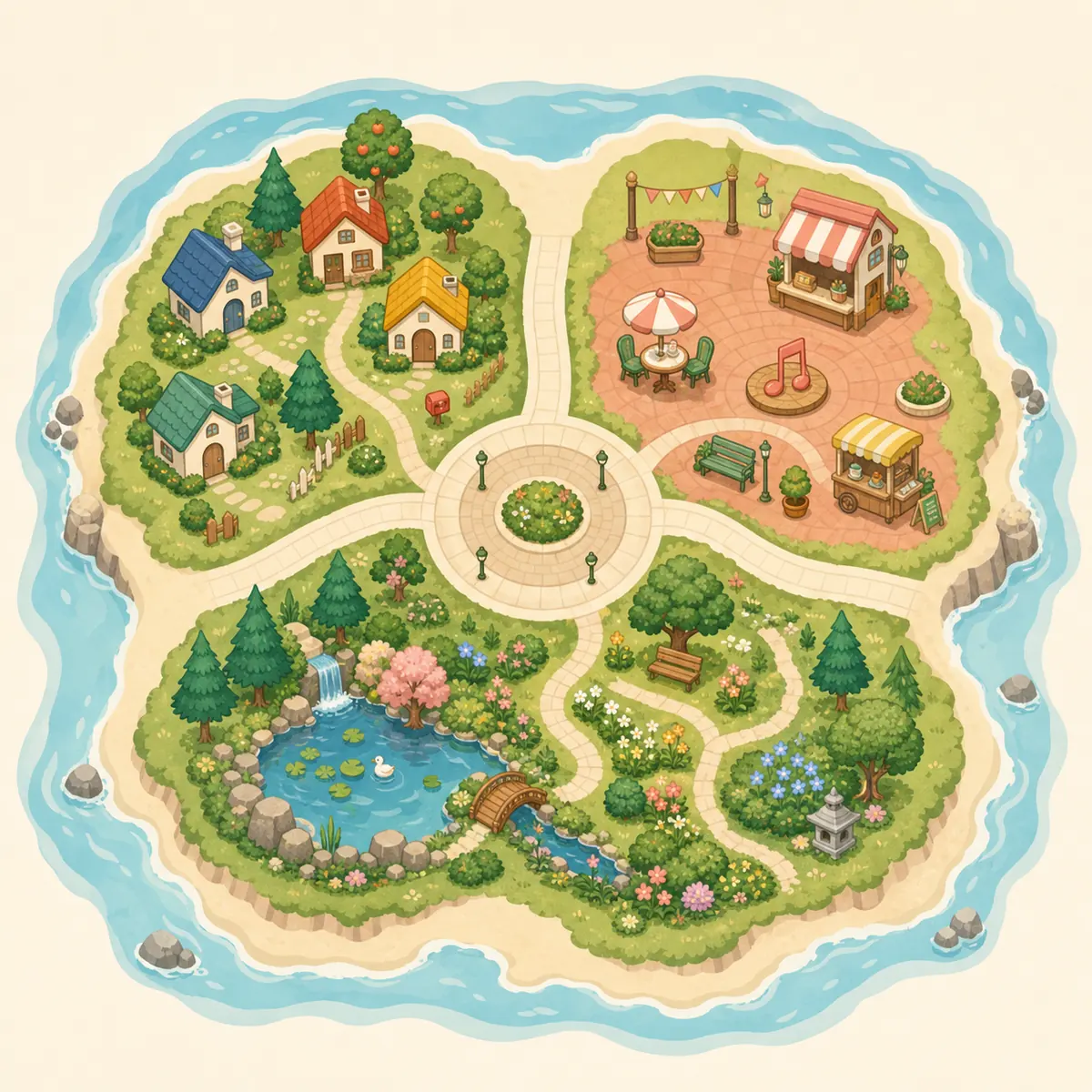
3. Build the central path before decorating
Paths are the quiet structure behind most useful island ideas. First decide where a resident should walk from a home area to the central plaza, then connect the plaza to the busiest activity or event zone. Only after the main route works should you add benches, trees, signs, water, or themed objects.
A good path does not have to be perfectly symmetrical. It needs a visible destination and enough width around important buildings. Use a loop when you want residents to pass through several neighborhoods, or use three spokes when you want a compact island that is quick to reorganize.
The three-second test
Open the island view and look for the first route a new player would take. Can they find the center, a home group, and one activity without guessing? If not, move landmarks or remove a turn before changing the theme.
Landmarks beat decoration density
Give each zone one memorable visual anchor: a fountain, garden pond, stage, bridge, tree cluster, or color family. Repeating the same anchor everywhere makes the map noisy; one strong landmark gives each neighborhood a job.
Leave breathing room
Open grass, water edges, and short empty stretches are useful visual pauses. They also give you a place to test a new resident or event without moving half the island. Empty space is part of the layout, not unfinished work.
4. Match resident groups to island zones
Island layout ideas become more personal when zones reflect the roles of the residents who use them. Social hosts and energetic characters can sit near the plaza or stage. Patient mediators can live near a garden or shared path. Creative residents can anchor a themed room cluster. This is a storytelling aid, not a rule that forces friendship or controls events.
Use the personality chart and calculator as planning references when a resident feels out of place. You can compare movement, speech, expression, and attitude, then decide whether the issue is the resident, the neighboring group, or simply a missing landmark. Change one planning direction at a time so you know what helped.
The social center
Place your most useful meeting point where several routes naturally cross. It can be a plaza, stage, café-style corner, or colorful landmark. Keep it visible from more than one direction so it feels like the island's shared address.
The quiet edge
A calm garden, pond, or tree-lined loop gives slower or more private residents a recognizable home base. It also prevents the island from reading as one continuous noisy event space.
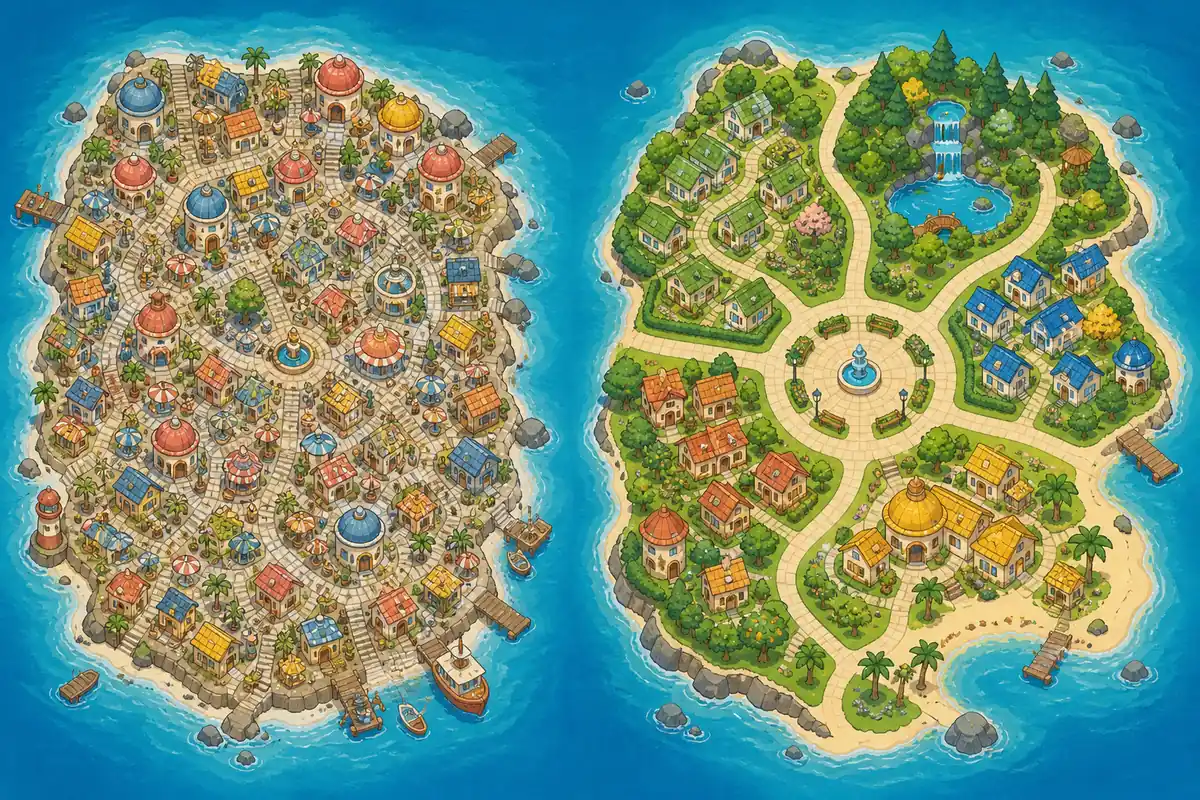
5. Themes that stay readable as the island grows
A strong theme uses a small visual vocabulary. Pick two main colors, one material or landscape cue, and one signature activity. A seaside market might use warm roofs, blue paths, food stalls, and a pier. A nature retreat might use green roofs, ponds, bridges, and a slow walking loop. Repeating a few cues is more convincing than adding every matching item you own.
Name ideas can support the theme, but the name should not carry the entire concept. If the island is called Sunset Bay, reinforce that promise with a warm central zone and a clear waterfront landmark. If the name is a joke, add one or two visual callbacks and keep the rest of the map practical.
Festival or activity island
Put the stage, food, games, and meeting spaces together so the theme has a visible center. Keep homes on a quieter ring so the busy area remains special rather than becoming visual noise everywhere.
Garden or nature island
Use a loop of trees, water, bridges, and small rest points. Place homes at the edge of the loop and keep one clean route back to the plaza. The contrast between a calm edge and a social center makes both zones easier to notice.
Neighborhood island
Group residents by a shared role, hobby, color, or story, then add one connector resident or landmark between groups. The connector prevents the neighborhoods from feeling like separate maps that never meet.
6. A repeatable planning checklist
Do not rebuild the whole island every time an idea feels slightly wrong. Take a screenshot or note of the current arrangement, then make one controlled change: move a landmark, open a path, relocate one resident group, or remove a repeated decoration. Watch the island for a few scenes before deciding whether the change worked.
This method is especially useful when you are planning both characters and spaces. Use the Mii ideas guide for a resident concept, the personality guide for a type comparison, and this page for the map-level decision. Each page answers a different question, so you do not have to repeat the same planning step in every place.
The six-step pass
1. Write the island promise. 2. Mark the central landmark. 3. Draw the main route. 4. Assign home, social, quiet, and flexible zones. 5. Add one theme cue per zone. 6. Review the whole island and remove anything that has no job.
When a layout feels wrong
Separate route problems from theme problems. If residents seem hard to find, simplify the path. If every area feels identical, strengthen one landmark or color family. If the island is crowded, remove duplicates before removing the idea that gives the island its identity.
7. Common layout mistakes to avoid
The most common mistake is treating every empty tile as a problem. Filling the map can hide the center, make paths ambiguous, and make a theme look accidental. The second mistake is moving every home to the edge without leaving a readable route back to shared spaces. A beautiful corner is not useful if nobody can reach it without crossing three unrelated zones.
Also avoid promising mechanics the public game information does not confirm. A layout can support a story, make residents easier to organize, and improve your own planning process; it cannot guarantee a friendship, confession, event, or personality result. Keep those claims separate from the visual design advice.
Too many competing centers
If every corner has a fountain, stage, bright color, and large building, the island has no visual hierarchy. Pick one primary center and let smaller landmarks support it.
Copying a theme without a function
A row of matching houses looks attractive, but it becomes stronger when the row has a reason: a family group, a creative neighborhood, a quiet edge, or a route that leads somewhere. Design the function first and the decoration second.
Sources and image note
Nintendo's official product and store information is the source for public product context. The layout structures, resident-zone suggestions, and three visuals on this page are independent fan planning material. The images are generated conceptual illustrations, not official game screenshots or Nintendo UI.
Tomodachi Life island ideas FAQ
What is a good Tomodachi Life island layout?
A central hub with clear paths to homes, social activities, and a quiet nature area is a reliable starting point. It is easy to understand, leaves room for growth, and can support many themes without forcing one exact map.
How do I organize a Tomodachi Life island?
Write one island promise, place one central landmark, draw the main route, assign a few zones, and only then add decorations. Review the whole map after each controlled change instead of moving every building at once.
What are good Tomodachi Life island layout ideas for a large cast?
Use neighborhoods based on roles, hobbies, colors, or story groups, then connect them with a shared plaza or landmark. Leave a flexible edge so the island does not become crowded when you add more residents.
Should I use Tomodachi Life island name ideas before designing the layout?
You can choose a name first, but let the layout make the name believable. Use the name as a theme filter and add one or two visual callbacks rather than trying to make every object match the joke or reference.
Can an island layout improve Mii compatibility or romance?
A layout can make groups easier for you to organize and can support a story, but it cannot guarantee compatibility, friendship, romance, or a random event. Treat personality and relationship guidance as planning tools, not hidden game controls.
Are these official Tomodachi Life island maps?
No. This page uses independent fan suggestions and generated conceptual illustrations. Check Nintendo for public product information, and prefer the final game screens and help text if they differ from any planning model here.