Mii children and island-life guide
Tomodachi Life Babies: How Miis Have Children and What to Expect
Can Miis have babies in Tomodachi Life? Learn the relationship steps, timing signals, naming questions, and limits of fan advice.
Updated August 15, 2026
Yes, babies are part of the relationship-and-family question in Tomodachi Life, but there is no responsible one-button cheat that guarantees the event. The practical path is to build a believable relationship, watch for the next in-game opportunity, and treat each scene as evidence instead of assuming that one personality value or gift controls the result.
This guide focuses on Tomodachi Life: Living the Dream and keeps older 3DS memories separate from current observations. Nintendo's public product information gives useful product context but does not publish every hidden probability or a universal baby timer. That is why the steps below emphasize what you can check, what you can record, and where a fan guide should stop making promises.
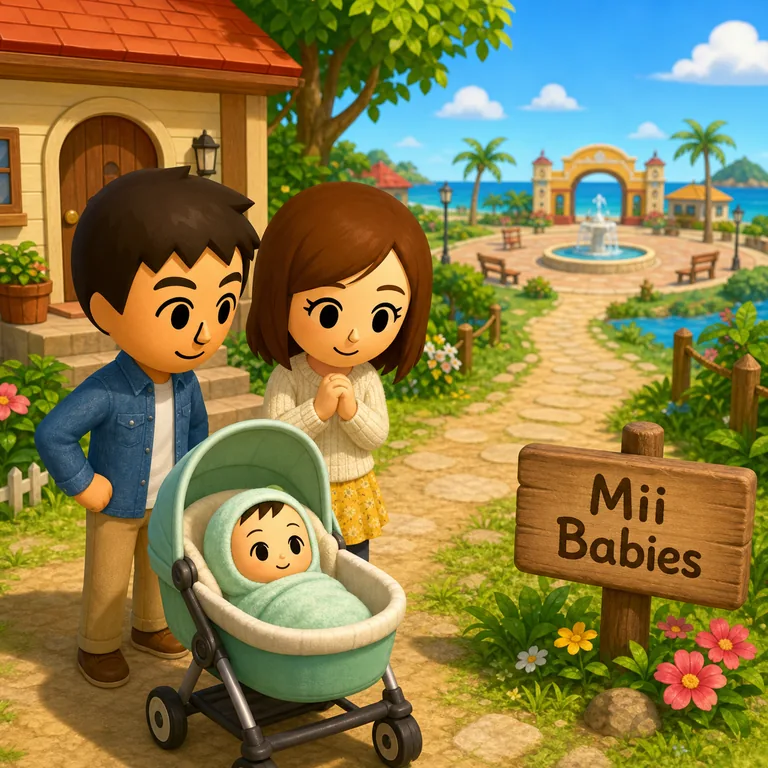
Quick answer: relationship first, observation second
Start with a couple whose relationship history you can describe. Keep their routine stable, notice when the game presents a family or child opportunity, and respond to that event in the current release. If nothing happens, review timing, other island events, and the relationship path before editing every personality setting. The goal is a repeatable test, not a guaranteed formula.
Can Miis have babies in Tomodachi Life?
The useful short answer is yes: baby and child events belong to the family side of the Mii relationship system. In practice, the couple needs a relationship history that has moved beyond a first introduction. A player can then wait for the next event, respond to the prompt that appears, and observe what follows. The event is not the same thing as a personality result, so a compatibility chart should not be presented as a baby generator.
The phrase Tomodachi Life babies also covers several different questions. Some players want to know whether a married pair can have a child, others want the steps for getting the event, and others are asking about timing, naming, or multiple children. Keeping those sub-questions together makes the guide useful without pretending that every answer has one fixed number.
What the answer does not mean
It does not mean that every married pair immediately has a baby, that a gift guarantees pregnancy, or that an old 3DS guide's exact timing automatically applies to Living the Dream. Use the current prompt and current release as the primary evidence.
What to check first
Write down the two residents, their relationship stage, recent scenes, and any major island events. This small record stops one quiet day from becoming a false rule and gives you a baseline for the next observation.
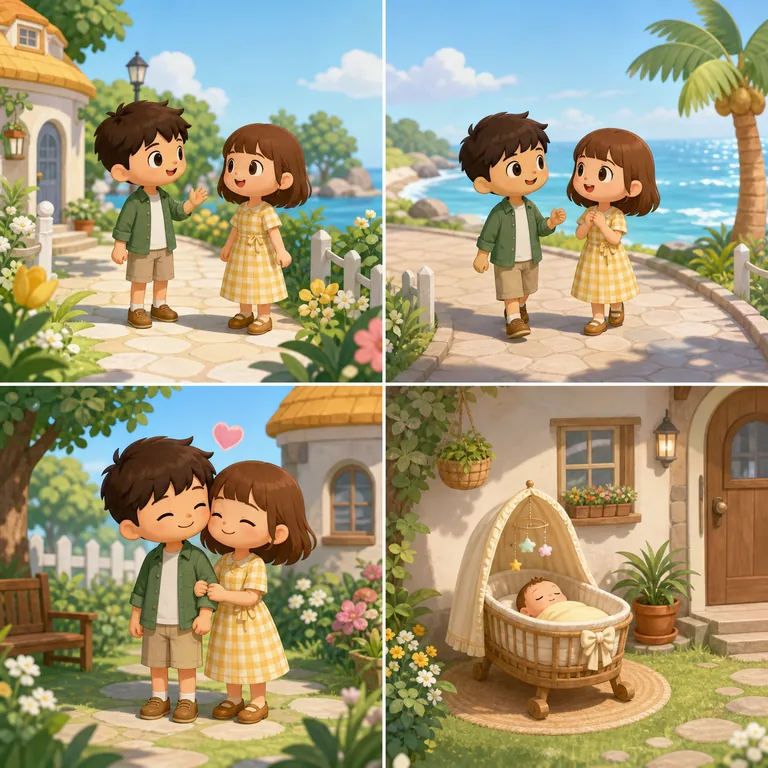
The relationship path before a baby event
Before searching for a baby, make sure the pair has a readable relationship story. A first meeting, a friendship, romantic interest, and a committed couple are different kinds of evidence. The existing romance guide is the right place to plan introductions and positive interactions; this page begins when the family question becomes the next decision. That separation helps avoid keyword and gameplay confusion between falling in love and having children.
Personality can help you choose a pair that is easy to observe, but it cannot replace relationship history. Two Miis with a comfortable pace may create clearer scenes, while a high-contrast pair can be fun but harder to interpret. If you change personalities, gifts, activities, and rooms all at once, you lose the ability to tell which change mattered.
Use the romance guide for the earlier stage
Plan introductions, shared activities, relationship signals, and marriage questions in the site's Mii romance guide. Link back here when the reader's next question changes from how to become a couple to what happens after the couple is established.
Keep one stable baseline
Save or record the original pair before testing. A stable baseline lets you compare a later baby opportunity with the earlier relationship rather than rebuilding the whole island from memory.
How to have babies in Tomodachi Life: a repeatable method
Use a small observation loop rather than a list of magic steps. First identify a pair with an established relationship. Next watch ordinary scenes and note whether a family-related prompt appears. When the game offers a new choice, follow the current in-game wording and record the outcome. Then observe another scene before deciding that the result is a general mechanic.
This order is useful because search results mix old gameplay memories, new-release queries, videos, and forum guesses. A short note of the date, release, relationship context, prompt, and result is more reliable than copying an exact timer with no source. It also makes the page safer to update when Nintendo publishes new information or players find a confirmed difference.
Example: a stable married pair
Keep the pair's routine recognizable, check the relationship guide for the last confirmed stage, and watch the island normally. If a baby opportunity appears, follow it and note the naming or care choices. Do not reset the pair just because the first few days are quiet.
Example: a pair with many competing events
If one resident is already involved in several relationship or island events, wait for a calmer observation window. Changing the cast to force a baby event can erase useful context and still cannot prove that the edit caused the outcome.
| Player question | Useful evidence | Safe conclusion |
|---|---|---|
| Can Miis have babies? | A couple reaches a child-related event | Babies belong to the relationship and family path; one slider cannot guarantee them. |
| How do I have babies? | Stable relationship plus an in-game opportunity | Observe the current release instead of importing an old timer or cheat. |
| When does it happen? | Milestone, notification, or follow-up scene | Public sources do not establish one universal schedule. |
| Can I name the baby? | The game presents a naming or care choice | Follow the prompt you actually see; do not assume every release uses the same wording. |
| Can a couple have multiple babies? | A later family event in the current game | Treat it as a version-specific question until you have direct evidence. |
| Nothing is happening | Relationship history and recent island events | Change one variable, keep the old setup, and observe again. |
Timing, naming, and multiple-baby questions
Timing is one of the most searched parts of this topic, but public sources and player reports do not justify a single universal countdown. A baby prompt may depend on the current relationship state, other island events, the release being played, and random scheduling. Use phrases such as “after the relationship event” or “when the prompt appears” unless you have direct, version-specific evidence for a more precise claim.
Naming is similarly prompt-dependent. If the game asks you to choose a name or respond to a child-related option, follow what is on screen and record the exact wording. For multiple babies, do not import a limit from an older version or a community post into Living the Dream without checking the current game. A clear FAQ can answer the question while keeping the unknown boundary visible.
When does a Mii baby arrive?
Treat the arrival as an event to observe after the relationship path reaches the relevant family stage. Avoid claiming a fixed number of days unless the current release documents it or you have repeatable evidence from the same version.
Can you name babies in Tomodachi Life?
Answer from the prompt shown in the version you are playing. A naming choice may be available in the child sequence, but the wording and timing should be checked in the current release rather than copied from an old video.
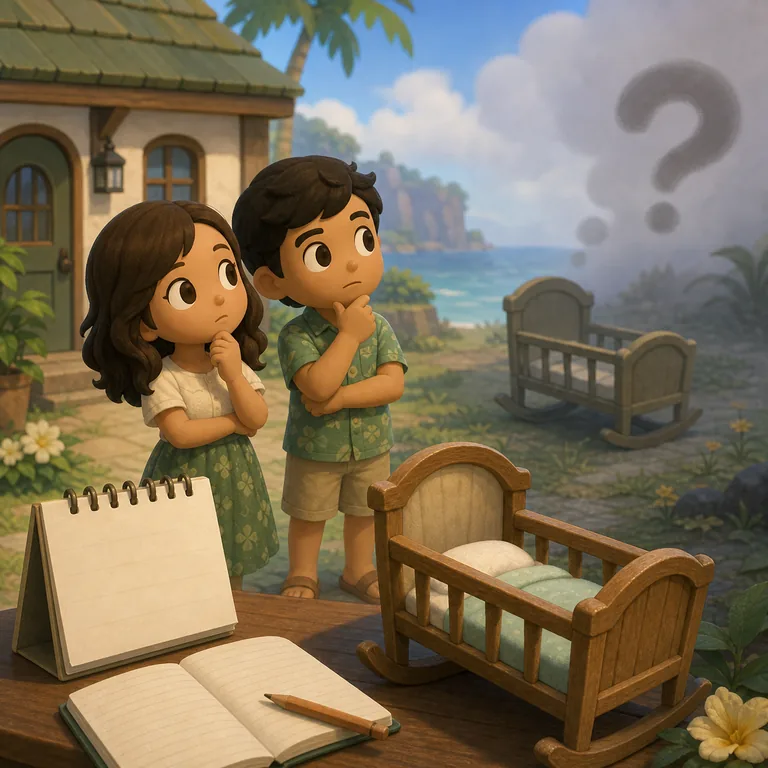
When no baby event appears
A quiet island does not prove that the couple is incompatible. Check the relationship history, the last meaningful scene, and whether another major event has occupied the residents. Then change one small planning variable, such as giving the pair a clearer shared routine, and observe again. Keep the previous values so you can reverse the test and avoid destroying the story you built.
If a couple is arguing, use the relationship-level guide to interpret the recent stage before trying to force a new outcome. A conflict, a crowded social group, or a chain of unrelated events can make the baby question feel stuck. Treat a positive scene as evidence for another observation, not as proof that the next event must happen.
A careful troubleshooting order
Review relationship stage, recent events, available interactions, and the wider island in that order. Only after those checks should you test one personality or environment adjustment. This keeps the change reversible and prevents a false cause-and-effect story.
Older guides and the new release
Older Tomodachi Life guides can supply useful vocabulary, but they may describe a different platform, translation, or event system. Keep the official Nintendo product page for product context and mark community observations as community observations.
How personality and island design fit around babies
The personality calculator and 16-type guide still help before and after the baby question. They can make a pair easier to understand, help you give each resident a role, and keep the island from feeling like a row of identical characters. They should be used as planning tools, not as evidence of a hidden fertility, marriage, or baby probability formula.
Island design also matters to the story you want to observe. A calm home area, a social meeting point, and a few distinct resident roles make relationship changes easier to notice. If the island has too many competing events, simplify one area or wait for a quieter cycle before making a major edit. This improves the quality of your observation without promising a specific outcome.
Use the personality chart as context
Compare two types, choose a shared rhythm and one contrast, then watch the relationship. If the pair reaches a family event, the chart explains the character setup; it does not replace the game's current event prompt.
Keep the island story readable
Use the Mii ideas and island-layout guides to give residents different roles and spaces. A readable cast makes it easier to tell which scene belongs to the baby storyline and which scene is unrelated background activity.
What this guide can and cannot verify
The reliable part of this page is the decision method: separate product context from fan observation, keep the relationship baseline, follow the current prompt, and describe timing or limits cautiously. The uncertain part is any hidden probability, exact timer, universal baby limit, or claim that a specific gift forces the result. Those claims need direct, version-specific evidence before they should be repeated as fact.
Nintendo's official page was checked for public product context. The illustrations on this page were generated as explanatory editorial art because copying official gameplay media was not necessary for the answer. They are not official screenshots, Nintendo UI, or proof of an in-game scene. Update this page when a current official help source or repeatable current-release evidence changes the boundary.
A useful evidence note
When reporting a result, include the release, relationship stage, prompt wording, and what happened next. This is more useful to another player than an absolute claim such as “this always works.”
The practical conclusion
If you want a baby, build the relationship first, observe the family event in the current game, and keep your changes small. If the event does not appear, do not blame one personality slider or invent a fixed timer.
Sources and image note
Nintendo's official product page was checked for public Tomodachi Life: Living the Dream context. The relationship sequence, examples, and limits on this page are independent fan guidance. All three WebP assets are generated conceptual illustrations, not official gameplay screenshots or Nintendo UI.
Tomodachi Life babies FAQ
Can Miis have babies in Tomodachi Life?
Yes, baby and child events belong to the family side of the Mii relationship system. The exact trigger and timing should be checked in the release you are playing; a personality setting or gift is not a guaranteed shortcut.
How do I have babies in Tomodachi Life?
Build an established relationship, keep a stable observation baseline, watch for the current game's family-related opportunity, and follow the prompt that appears. Do not import an exact 3DS timer into Living the Dream without evidence.
When do Miis have babies in Tomodachi Life?
There is no public universal schedule that this guide can verify. Treat the baby as a relationship event to observe after the relevant stage, and record the current release, prompt, and result before making a timing claim.
Can Miis have more than one baby?
This is a version-specific edge case. Check the current game and the prompt history rather than copying a number from an old forum post or video. The page does not invent a universal limit.
Can you name babies in Tomodachi Life?
Use the naming or care prompt shown by the version you are playing. The existence and wording of a choice should be confirmed on screen instead of assumed from a different release.
Does personality compatibility guarantee a baby?
No. Personality helps organize a believable pair and island role, but it does not prove a hidden baby probability formula. Relationship history, events, timing, and randomness may all matter.